
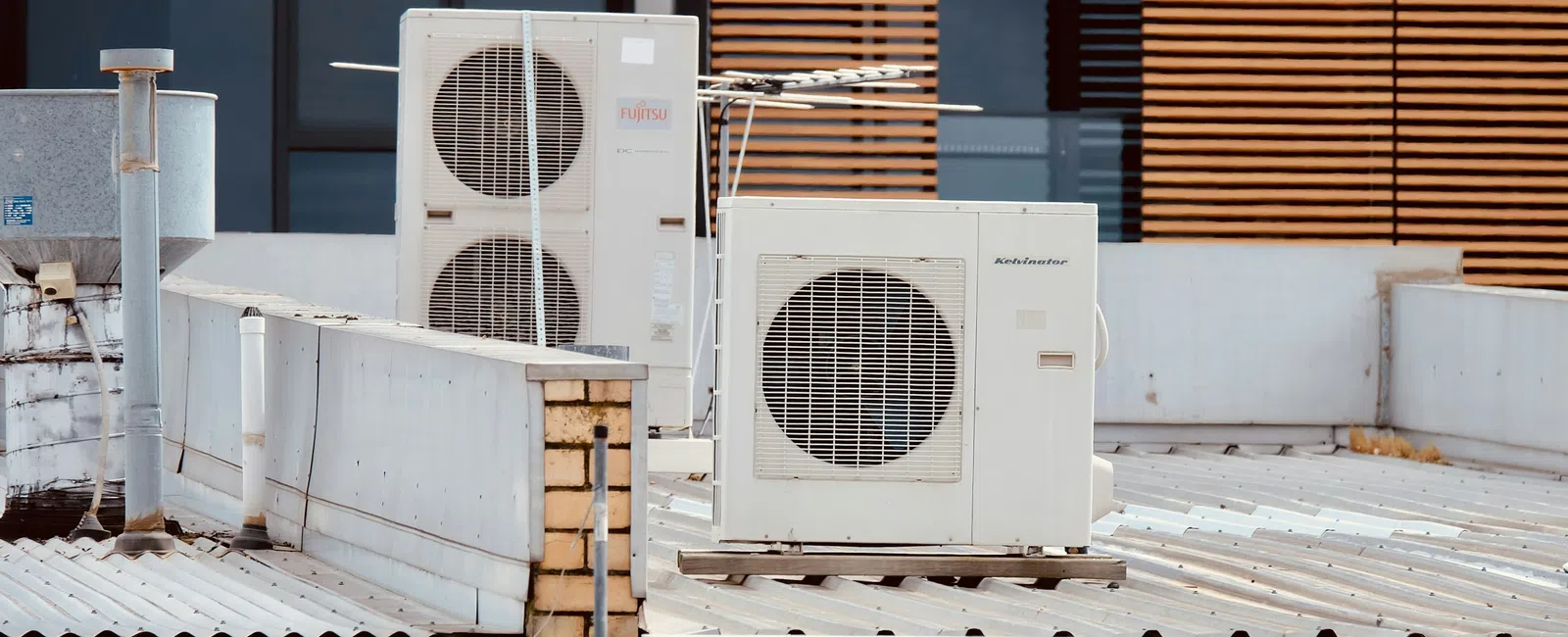
What A Split System HVAC Actually Is
A split system HVAC is heating and cooling equipment that is literally split into two parts, one outside your home and one inside. The two pieces work as a team, connected by copper refrigerant lines and wiring that run through your wall. This is the setup in most homes across North Metro Atlanta, so when someone says HVAC split system or split system air conditioner, they are usually describing the standard central setup you already picture in your head.
Compare that to an all-in-one design where every component sits in a single cabinet, and the name starts to make sense. The work is divided across two units instead of packed into one.
The Two Halves And How They Work Together
The outdoor unit holds the compressor and condenser coil. This is the part that sits on a pad beside your house and hums to life on a hot afternoon. Its job is to release heat outside.
The indoor unit is either a furnace or an air handler, paired with an evaporator coil and a blower. It usually lives in a closet, attic, or basement. This half moves conditioned air into your ductwork and out through the vents in each room.
Refrigerant is the go-between. In cooling mode, it absorbs heat from the air inside your home, carries it out to the condenser, and releases it outdoors. Your blower then pushes the cooled air back through the ducts. For heat, a gas furnace burns fuel to warm the air, or, in a split system heat pump, the refrigerant cycle simply runs in reverse to pull warmth inside. Same two units, opposite direction.
The Main Types Of Split Systems
Not every split system looks the same under the hood. Three setups cover most homes.
The classic pairing is a central air conditioner with a gas furnace. You cool with the AC in summer and heat with the furnace in winter, all through one duct system.
A split system heat pump swaps the furnace for a heat pump, giving you both heating and cooling from the same outdoor unit. These are popular here because our winters stay mild enough for a heat pump to carry most of the season.
The third option skips ductwork entirely. A small outdoor unit connects to one or more indoor heads mounted on the wall, and each one heats and cools its own zone. These work well in additions, bonus rooms, and older homes where running new ducts is a headache, so a ductless mini split is often the smarter fit for those spaces.
Split System Vs Packaged Unit
The main alternative is a packaged unit, which combines the compressor, coil, and air handler into a single cabinet, usually placed on the roof or on a slab outside. Packaged systems make sense for homes and small commercial buildings that lack indoor space for a furnace or air handler.
Most Atlanta-area houses have room in an attic, closet, or crawlspace, so split system heating and cooling remains the far more common choice. It also tends to offer more efficiency options and easier access for repairs, since the parts are not crammed into one box.
Why Split Systems Are So Common In Homes
Homeowners keep choosing split systems for a few practical reasons. The equipment comes in a wide range of efficiency ratings, and your SEER rating tells you how those models compare on energy use before you buy.
Splitting the components also keeps the noisy machinery outside and the air-moving parts tucked away indoors, so your living space stays quieter. And because the two units are separate, a technician can service or replace one side without tearing out the whole system.
Sizing matters more than any single feature, though. A unit that is too large or too small will short cycle, run up your bills, and wear out early, which is why correctly sizing your HVAC system comes before any brand or model decision.
Is A Split System Right For Your Home?
For most homeowners in Cherokee, Cobb, and Fulton counties, the answer is yes, and the real questions are which type and what size. If you are building new, a split system gives you the flexibility to zone the house and choose your efficiency level. If you are replacing an aging system, it is often the simplest swap, because your existing ductwork is already in place, assuming that ductwork is in good shape.
A home with no ducts, a room that never gets comfortable, or a finished space over the garage may be a better match for a ductless setup. The only way to know for sure is a proper in-home assessment, where a technician measures your space, checks your ducts, and factors in our humid Georgia summers.
Talk To MR. HVAC
Family-owned and operated for more than 25 years, MR. HVAC installs and services split systems, heat pumps, and ductless setups across Canton, Woodstock, Roswell, and the surrounding counties. We keep pricing upfront, offer same-day service and 24/7 emergency repair, and send licensed technicians who stock most parts right on the truck.
If you are weighing a new split system or just want a straight answer about the setup you already have, reach the team by calling us today or scheduling your service online. We will help you find the system that fits your home and your budget, with no pressure and no guesswork.


