
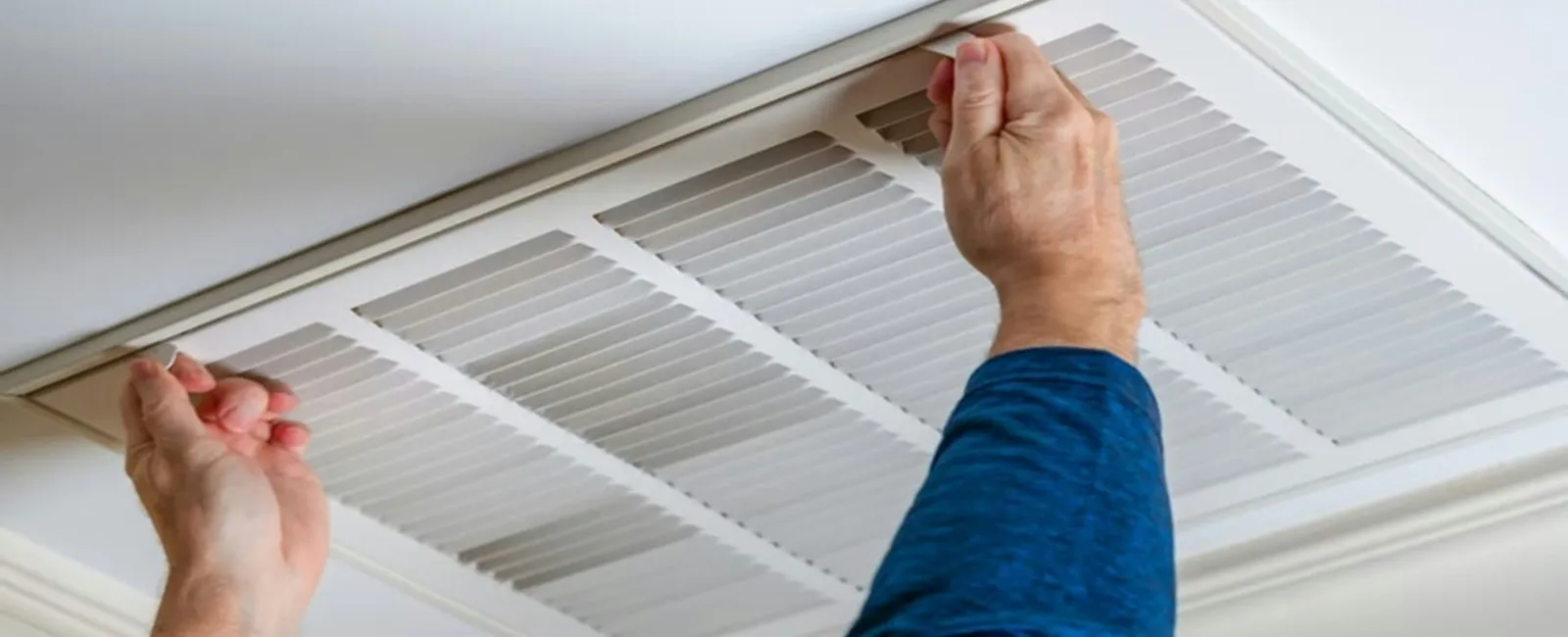
Why Weak Airflow Is Usually a Symptom, Not the Problem
Weak air flow from vents in house complaints are among the most common HVAC issues we address for homeowners in Metro Atlanta. The thermostat shows the system is running, but rooms farthest from the air handler stay warm and uncomfortable. Many homeowners search for the best air duct cleaning services, expecting a cleaning will solve the problem. Often the actual issue is duct damage, undersized ductwork, an aging blower motor, or a clogged filter that has been restricting the system for months. Knowing which problem you actually have saves you time, money, and a service call that does not fix the underlying issue.
Why Weak Airflow Is Usually a Symptom
Airflow depends on multiple components working together. The return system pulls air in, the filter allows that air to pass through, the blower moves it forward, the coils condition it, and the supply ducts deliver it to your rooms. If any one of those components is restricted, damaged, or disconnected, the rooms at the end of the duct run are affected first.
Cleaning a system that has a structural duct problem will not restore airflow. The dust returns, the warm rooms stay warm, and the homeowner ends up paying for the correct repair afterward. The purpose of a proper diagnostic visit is to identify the actual cause before recommending a service.
The Three Categories of Airflow Problems
Almost every weak airflow situation falls into one of three categories, and the correct fix is different for each.
Category one is restriction inside the system. This includes a dirty air filter, a clogged evaporator coil, a blower wheel coated in dust, or heavily fouled ducts that are reducing the usable interior space. In some of these cases, including the duct fouling and blower wheel scenarios, professional duct cleaning is part of the answer.
Category two is structural duct problems. Disconnected duct sections, crushed flex duct in attics or crawl spaces, separated joints leaking conditioned air into unconditioned space, holes from rodents, or undersized ductwork that was inadequate for the home from the start. These problems require HVAC duct repair, not cleaning. Cleaning a duct with structural damage does not restore airflow because the underlying defect is still present.
Category three is the HVAC equipment itself. A failing blower motor, low refrigerant causing the evaporator coil to ice over, a stuck damper, or a control board issue can all reduce airflow even when the ducts are in good condition. In these cases, neither cleaning nor duct repair is the right path. The system itself needs service.
A licensed technician can usually identify which category your problem falls into within the first thirty minutes of a visit.
Signs Your Air Ducts Need Cleaning Specifically
The first sign is visible dust or debris coming out of supply registers when the system starts. Not a thin layer of dust on the vent cover itself, but actual particles being pushed into the room. The second sign is heavy buildup visible inside the duct opening when you remove a register, often combined with a musty odor that appears only when the system is running. The third sign is significantly worsening allergy or respiratory symptoms inside the home that improve when residents are outside or in another building.
Recent renovation work that introduced drywall dust or insulation particles into the system is another strong indicator. So is confirmed evidence of pest activity inside the ductwork, including droppings near registers or odors consistent with animal activity. Construction debris and pest contamination are two of the few scenarios where most HVAC professionals agree that duct cleaning is worthwhile.
What is not a reliable sign that you need duct cleaning, on its own, is the fact that your home is several years old or that the ducts have never been cleaned. Most HVAC systems are designed with filtration adequate for ordinary household dust, and many homes go their entire service life without needing professional duct cleaning.
When HVAC Duct Repair Is the Correct Service
Duct repair is the correct service when the ductwork has a structural or sealing problem rather than a contamination problem.
Flex duct supports loosen, sheet metal joints come apart, and entire branches can deliver conditioned air into the attic instead of into a bedroom. If one specific room has noticeably worse airflow than the rest of the home, this is often the cause.
Leaking duct seams and joints can lose roughly twenty to thirty percent of conditioned airflow before that air reaches a register. Sealing those leaks restores airflow, lowers energy bills, and improves comfort. Duct cleaning does not address this issue at all.
Crushed or kinked flex duct is another frequent finding. Insulation contractors, electricians, plumbers, and pest control technicians all spend time in attics, and flexible ductwork sometimes gets compressed against framing. A crushed section can reduce airflow to one room significantly while the rest of the house seems unaffected.
Undersized or poorly designed ductwork is a more difficult problem. If a home addition was built without expanding the duct system, or if the original installer ran trunk lines that were too small for the equipment, the correct fix involves partial redesign and replacement. We tell homeowners honestly when this is the situation they are in, because it changes the cost conversation significantly. HVAC duct repair cost varies based on which of these issues is present, and we provide upfront pricing before any work begins.
What to Check Before You Call
A filter that is overdue for replacement is the single most common cause of weak airflow we encounter, and it costs ten to thirty dollars to address. If the filter is gray or heavily coated, replace it and run the system for a day before scheduling service.
Walk through your home and verify that every supply register is fully open and that nothing is blocking returns. Furniture against a return grille, a closed damper behind a register, or a rug covering a floor vent can each reduce airflow to specific rooms. Children sometimes close registers without telling anyone.
Check that interior doors to bedrooms are not consistently closed in homes that have only one central return. If return air cannot get back to the system, the system cannot continue delivering supply air to that room at full volume. Door undercuts or transfer grilles can resolve this without ductwork changes.
When in Doubt, Have It Inspected First
Most weak airflow problems cannot be fully diagnosed by a homeowner without professional equipment. A short inspection identifies the actual cause, separates duct cleaning needs from duct repair needs from equipment service needs, and allows you to make an informed decision about what is worth spending money on.
If your vents are weak, your rooms are uneven, or you are unsure whether your ducts are the issue, we are happy to inspect the system. We have served Metro Atlanta homeowners for more than twenty-five years, hold an A+ BBB accreditation, and have earned more than 130 five-star reviews from neighbors who appreciate honest assessments and upfront pricing.
Call MR. HVAC at (770) 213-4111 or schedule service online for a no-obligation quote. If your ducts are in good condition, we will tell you. If they need cleaning, repair, or other service, you will know exactly what the problem is and what the repair costs before any work begins.


