
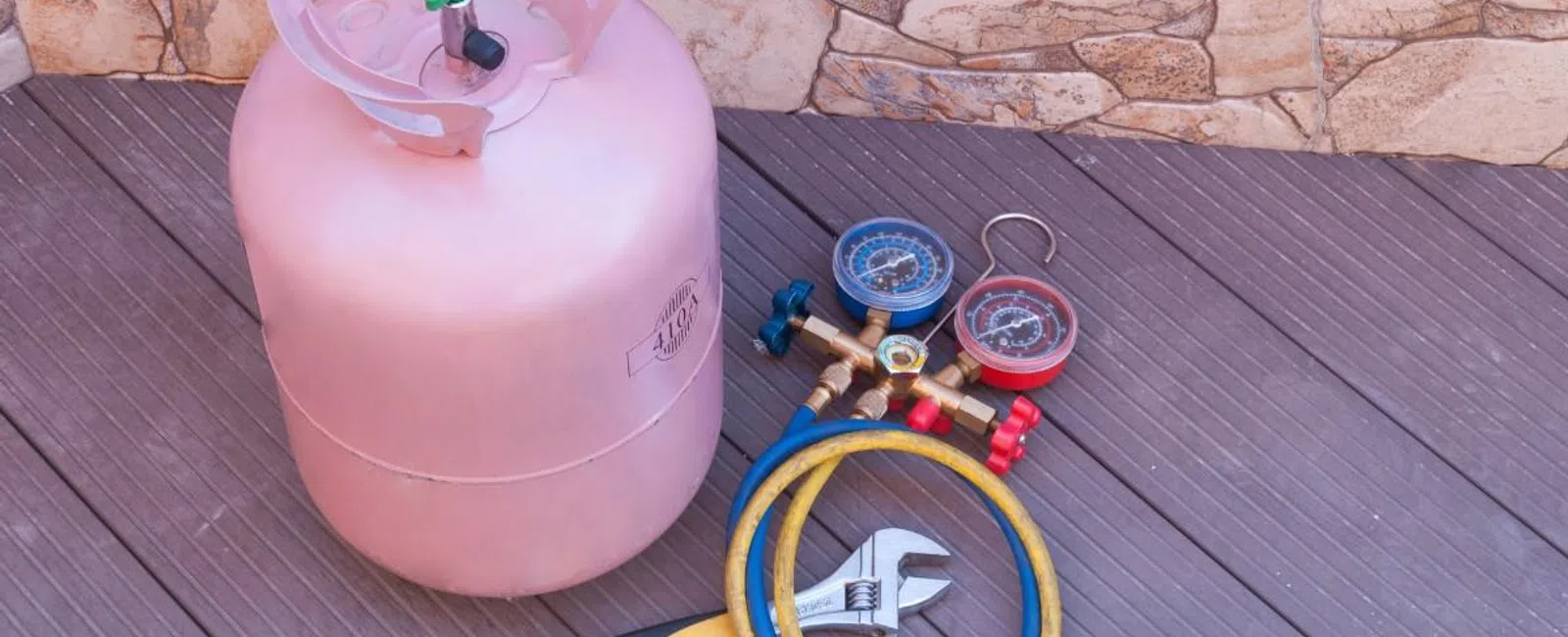
Common signs of low refrigerant include warm air from the vents, ice on the refrigerant lines, unusually long cooling cycles, and higher energy bills. Refrigerant isn't something an AC uses up like fuel, so if the level is low, there's a leak somewhere in the system, and catching it early can save you from a much larger repair. A freon recharge only solves the symptom, not the cause, which is why finding and fixing the leak matters as much as topping off the charge.
Common Signs of Low Freon in Your AC Unit
One of the first symptoms of low Freon in a central air conditioner is poor cooling performance. When an AC unit is low on refrigerant, it can't effectively remove heat from your indoor air, resulting in lukewarm airflow and an uncomfortable home.
Other low refrigerant symptoms include unusually long cooling cycles and higher energy bills. That's because your AC is working overtime trying to reach your set temperature. If left unaddressed, these problems can cause damage to other components like the compressor.
You may also notice ice buildup on your refrigerant lines or evaporator coil. While this may seem counterintuitive, it indicates that your AC is low on Freon. The evaporator coil gets too cold and moisture in the air freezes on contact.
Key symptoms of low refrigerant levels include:
- Warm or lukewarm air from vents
- Ice or frost on refrigerant lines
- Hissing or bubbling noises from the unit
- High electric bills with no change in usage
- AC runs longer than usual or never reaches set temperature
If you're noticing one or more of these low Freon symptoms, it's time to take a closer look at your system.
What Causes Low Refrigerant in AC Systems?
Refrigerant is not supposed to run out. An AC unit is a closed-loop system, meaning the refrigerant should remain at the same level indefinitely unless there's a leak. The most common cause of low refrigerant is a leak, often due to corrosion in the copper lines, cracks in the evaporator coil, damaged service valves, or poor installation.
Refrigerant leaks can be tricky to identify without the right tools, and they can worsen over time. If you suspect your AC is low on Freon, it's essential to contact a licensed HVAC professional for AC repair to inspect the system and perform a pressure test.
How to Check the Refrigerant Level in Your AC
While a few DIY methods may suggest your AC is low on refrigerant, accurately checking refrigerant levels requires professional tools and training. That said, you can still look for signs that may point to a potential Freon issue before calling a technician.
Step 1: Check for Ice on the Refrigerant Lines
One of the most obvious low Freon symptoms is ice forming on your outdoor AC unit or indoor evaporator coil. This happens when refrigerant pressure drops too low, causing temperatures in the coil to fall below freezing.
Step 2: Monitor Your System's Cooling Cycles
Pay attention to how long your air conditioner runs. A system that runs constantly but can't reach the thermostat setting is a major red flag for low refrigerant levels.
Step 3: Feel the Airflow from Your Vents
If the air coming from your vents is warm or not as cool as it used to be, that could indicate your AC is low on Freon. Compare it with the outdoor temperature and your thermostat setting.
Step 4: Listen for Hissing or Bubbling
If you hear strange noises near the refrigerant lines or evaporator coil, you could have a leak. This is a clear reason to check refrigerant levels with a professional.
Important: You should never attempt to open refrigerant lines or add Freon yourself. Only EPA-certified technicians are allowed to handle refrigerants legally and safely.
AC Low on Freon? Why It's a Big Deal (and Will It Shut Off?)
Running an AC system low on refrigerant puts immense stress on the entire cooling cycle. Without enough refrigerant, the compressor may overheat, and the evaporator coil may freeze. Many systems include a low-pressure safety switch that's designed to shut the compressor off automatically once refrigerant pressure drops too far, protecting it from running without proper lubrication. Not every system catches this in time, though, and older or poorly maintained units may keep running low on refrigerant until real damage is done.
Operating your AC while it's low on Freon can shorten the system's lifespan even when the safety switch does its job, because every cycle before the shutoff adds wear. The compressor, the most expensive part to replace, is especially vulnerable. If you suspect low refrigerant is the issue, shut off your system and schedule an HVAC service call immediately. Catching the problem early can mean the difference between a simple recharge and a full system replacement.
Professional AC Refrigerant Level Check: What to Expect
If you hire a technician to check your AC refrigerant level, they'll use a pressure gauge and temperature readings to determine whether the refrigerant charge is within the correct range. That typically includes a visual inspection of the evaporator and condenser coils, pressure measurement with HVAC gauges, leak detection using electronic detectors or UV dye, and a recommendation on whether the system needs recharging, repairs, or replacement.
A proper refrigerant level check also involves verifying that the metering device and other components are working properly. If a leak is found, your technician must repair it before adding more refrigerant. Simply "topping off" a leaking system is both ineffective and illegal.
Long-Term Solutions for Low Refrigerant Issues
If you've had your AC recharged multiple times, that's not normal. Recurring low refrigerant levels are a sign of a deeper problem, usually an undetected leak or aging components. Depending on the age and condition of your system, your options may include:
- Repairing the refrigerant line or coil
- Replacing the evaporator or condenser coil
- Upgrading to a new energy-efficient system using newer refrigerants like R-410A or R-32
Modern systems are more efficient and environmentally friendly. Older units using R-22 Freon are becoming harder and more expensive to service, so replacing them may be the smarter long-term solution.
Preventing Low Refrigerant in the Future
The best way to avoid problems with low refrigerant is through preventive maintenance. Annual AC tune-ups include system pressure checks, coil inspections, and early leak detection.
Pay attention to minor signs along the way. If your home feels warmer than usual or you hear odd noises from your unit, take action right away. Addressing low Freon symptoms early helps you avoid a bigger repair down the road.
Get Professional Help if Your AC Is Low on Refrigerant
If you're experiencing low refrigerant symptoms, don't wait for your AC to give out completely. Our licensed HVAC technicians are trained to detect leaks, safely recharge systems, and provide long-lasting solutions for cooling problems. Schedule your AC service with MR. HVAC today.


