
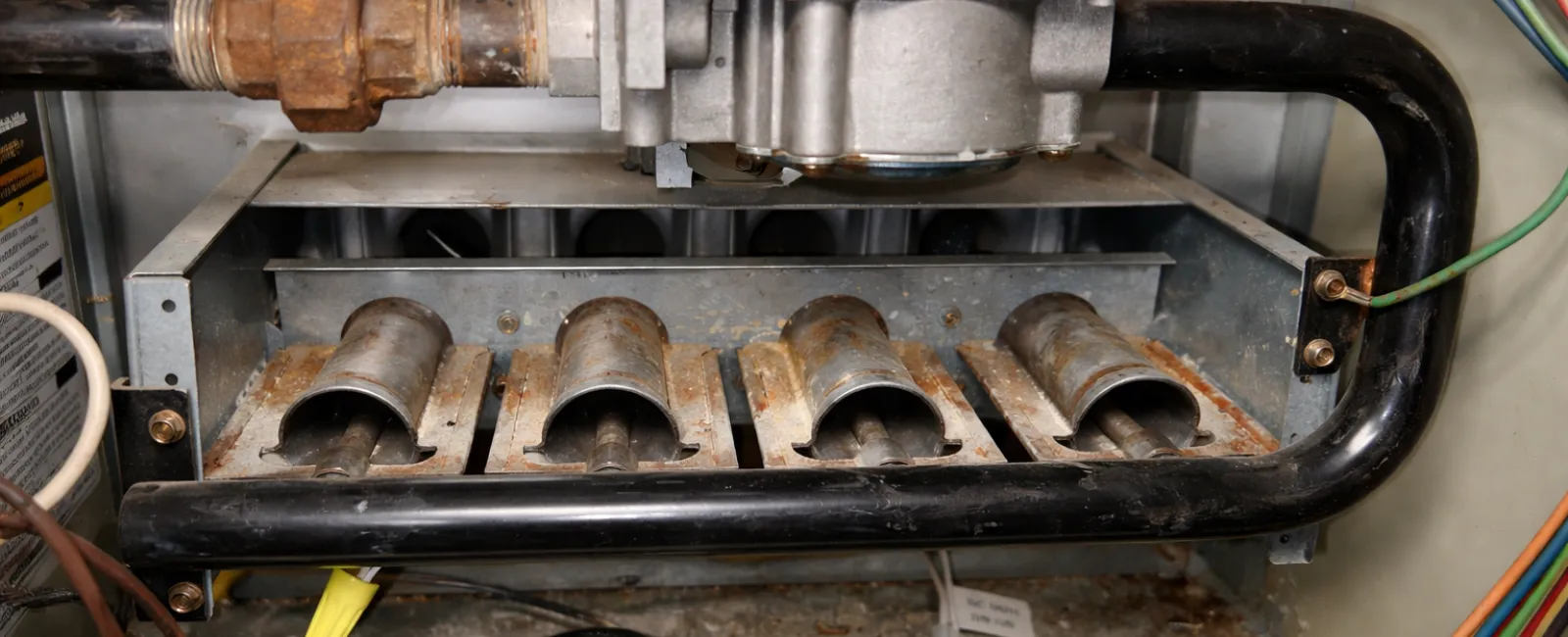
Your furnace clicks on. You hear the inducer motor spin up. Then nothing happens. The burners never light, and the blinking light on your furnace control board shows a pressure switch fault. Your heating system has entered safety lockout, and it won't budge until something changes.
A pressure switch stuck open is one of the most common furnace problems homeowners face, especially in North Georgia, where furnaces sit idle for months before being called into action during the first cold snap. But here's what most homeowners don't realize: this "malfunction" is often the pressure switch doing exactly what it was designed to do.
What the Pressure Switch Actually Does
The pressure switch is your furnace's first line of defense against carbon monoxide entering your home. Before the burners can ignite, the switch must confirm that combustion gases have a clear path to exit the building. If that path is blocked or restricted, the switch stays open, preventing ignition entirely.
Here's the sequence that happens every time your furnace starts a heating cycle:
First, the inducer motor activates. This small blower at the top of your furnace creates negative pressure (suction) in the heat exchanger and venting system. It's essentially pulling air and any residual gases up and out before combustion begins.
The pressure switch monitors this suction through a small rubber hose connected to the inducer housing. When the inducer generates sufficient negative pressure, the switch closes, completing the electrical circuit. Only then does the control board allow the ignition sequence to proceed.
If the switch doesn't sense adequate suction, it remains open. The furnace interprets this as "unsafe to ignite" and shuts down. The blinking error code tells you the system tried to start but couldn't verify safe venting conditions.
Why the Switch Is Designed to Fail This Way
The pressure switch is a "normally open" device. This means its default state, with no power applied, is open (preventing ignition). The switch only closes when it actively detects proper conditions.
This design is intentional. If the switch failed in the closed position, your furnace could ignite even when combustion gases couldn't vent properly. Carbon monoxide could back up into your home. Small explosions could damage the heat exchanger. The normally open design ensures that any failure mode results in no heat rather than a dangerous condition.
So when your pressure switch is "stuck open," it's often not stuck at all. It's simply refusing to close because conditions aren't right. The switch is protecting you from something worse than a cold house.
Common Reasons the Switch Won't Close
Several conditions can prevent the pressure switch from sensing adequate suction, even when the inducer motor is running normally.
Blocked Exhaust Venting
The most frequent cause is an obstruction somewhere in the exhaust path. Birds and rodents nest in vent terminations during warmer months when the furnace isn't running. Leaves, debris, and even ice can block the vent cap on the exterior of your home. A partial blockage anywhere in the flue restricts airflow enough to prevent proper pressure readings.
High-efficiency furnaces vent through PVC pipes that exit horizontally through a wall. Standard-efficiency furnaces typically vent vertically through a metal flue. Both can develop obstructions, but the horizontal runs of high-efficiency systems are particularly vulnerable to debris accumulation and to improper slopes that allow water to pool.
Problems with the Pressure Hose
The small rubber hose connecting the switch to the inducer housing is critical for accurate pressure sensing. Cracks, holes, kinks, or disconnections anywhere in this hose prevent the switch from detecting suction. Rodents sometimes chew through the tubing. Age and heat exposure cause rubber to become brittle and develop hairline cracks that aren't immediately visible.
In high-efficiency furnaces, water can accumulate in this hose. Condensation from exhaust gases drains back through the system, and if the hose has a low spot, water collects there. Even a small amount of water can block the airflow needed for the switch to sense pressure changes.
Clogged Condensate Drain
High-efficiency furnaces produce significant condensation as a byproduct of extracting more heat from combustion gases. This water drains through a condensate line similar to the one in your air conditioner. If the line clogs, water backs up into the inducer housing, affecting both motor operation and pressure switch readings.
Inducer Motor Issues
If the inducer motor isn't creating enough suction, the pressure switch can't close, regardless of whether everything else is working. A failing motor may run but not produce adequate draft. Bearings wear out over time. Debris inside the inducer wheel reduces its effectiveness. The motor itself may not be getting proper voltage due to electrical issues elsewhere in the system.
Failed Pressure Switch
The switch itself can fail. The internal diaphragm, which moves in response to pressure changes, can rupture or become stuck. Electrical contacts inside the switch can corrode. After years of cycling, the switch simply wears out and no longer responds accurately to pressure changes.
A technician can test the switch function with a multimeter and a manometer. If the switch shows continuity when it shouldn't, or fails to show continuity when it should, the switch needs to be replaced.
What the Error Code Tells You
Most furnaces have a diagnostic LED on the control board that blinks in patterns to indicate specific problems. The pattern for a pressure switch fault varies by manufacturer. Your furnace's door panel or manual explains what each code means.
However, the code only tells you the pressure switch didn't close when expected. It doesn't tell you why. The switch might be bad, or the switch might be correctly reporting that something else is wrong. Professional furnace diagnosis determines which scenario you're dealing with.
Intermittent Failures as Early Warning
Sometimes the pressure switch issue appears sporadically. The furnace works fine for several cycles, then fails to ignite, then works again later. This intermittent behavior often indicates a developing problem that hasn't yet become severe enough to cause consistent failure.
Marginal obstructions in venting, hoses with tiny cracks, or switches on the verge of failure can all cause this pattern. The system barely makes it some of the time but falls short under slightly different conditions. Temperature, humidity, and wind can all affect whether a marginal system passes or fails on any given cycle.
Intermittent pressure switch faults shouldn't be ignored. The underlying cause typically worsens over time. What starts as an occasional failure to ignite becomes a complete system lockout, usually on the coldest night of the year when you need heat most.
The Diagnostic Process
When you call for furnace repair service, the technician follows a systematic process to identify why the switch isn't closing. They don't simply replace the switch and hope for the best.
First, they verify the inducer motor is actually running and producing adequate draft. They may use a manometer to measure the actual vacuum at the pressure switch port and compare it to the switch's activation threshold.
They inspect the entire venting system from the furnace to the termination point outside. Any restriction, damage, or improper installation gets noted.
The pressure hose gets examined for cracks, kinks, water accumulation, or poor connections. This inexpensive component is responsible for a disproportionate number of pressure switch complaints.
On high-efficiency furnaces, the condensate system gets checked. A clogged drain or damaged trap affects both drainage and pressure readings.
Finally, the switch itself gets tested. If everything upstream is functioning correctly and the switch still won't close, replacement is warranted.
Why Professional Diagnosis Matters
Replacing a pressure switch is mechanically simple. Two screws, two wires, and a hose connection. But installing a new switch without addressing the actual cause of failure can lead to the same problem recurring, sometimes within days.
More importantly, the pressure switch protects against carbon monoxide hazards. Bypassing or improperly testing this safety device creates a serious risk. An experienced heating technician has the tools and training to diagnose correctly and ensure the repair actually solves the problem.
Some underlying causes of pressure switch faults, such as a cracked heat exchanger affecting internal pressure, indicate serious safety issues that only surface during proper diagnostic procedures. A technician looking at the whole system catches these problems. Someone focused only on getting the furnace running might miss them entirely.
Preventing Future Pressure Switch Problems
Regular furnace tune-up visits include inspection of the pressure switch, hose, and venting system. Catching deterioration early prevents cold-weather emergencies.
Annual furnace maintenance should include cleaning the inducer motor and housing, inspecting and clearing venting, checking condensate drainage on high-efficiency units, and verifying pressure switch operation.
Between professional visits, keep the area around your exterior vent terminations clear. Check periodically for bird nests or debris accumulation. If your furnace sits unused for months during mild North Georgia weather, a brief test run before you actually need heat can reveal problems while you still have time to address them.
When Your Furnace Won't Ignite
If your furnace shows a pressure switch fault, resist the urge to keep resetting it, hoping the problem goes away. Each failed ignition attempt indicates that the system correctly refuses to operate under questionable conditions. Repeated resets don't fix the underlying issue and may mask a worsening problem.
MR. HVAC provides thorough furnace diagnostics for homeowners throughout Canton, Woodstock, Roswell, and Alpharetta. We identify not just which component isn't working, but why, ensuring repairs actually resolve the issue rather than temporarily masking it.
When your heating system goes into safety lockout, don't wait for a colder night to make the problem urgent. Schedule a professional furnace diagnosis and get your system operating safely and reliably.


